
Computer Vision Engineer Salary Benchmark Europe

Computer Vision Engineer Salary Benchmark Europe (2026 Guide)
If you are benchmarking the computer vision engineer salary Europe market in 2026, you are already seeing the same pattern across most hubs: compensation is being pulled up by production demand, safety-critical applications, and a persistent AI talent shortage, while budgets are being scrutinised harder than in the 2021 to 2022 boom.
This guide summarises realistic salary ranges across Europe (gross annual base), explains differences by country and specialisation, and highlights the true hiring cost for employers including payroll taxes, relocation, time-to-hire, and cross-border complexity. For companies building autonomous systems, robotics, or industrial AI, these benchmarks also help you decide whether to hire locally, hire remotely, or run cross-border recruitment with a specialist partner such as an AI recruitment agency in Europe.
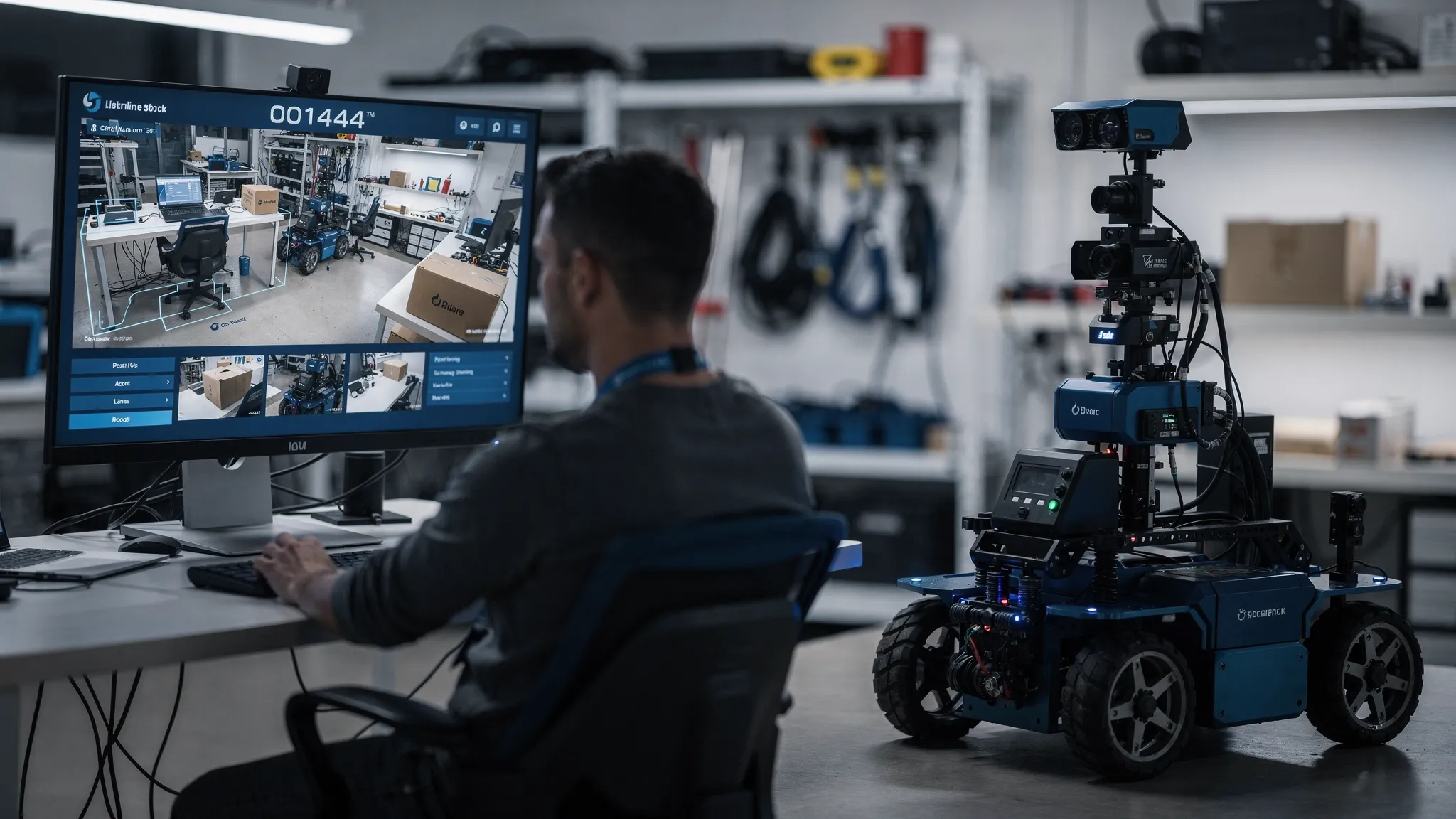
What Does a Computer Vision Engineer Do?
A Computer Vision Engineer builds systems that extract meaning from images and video. In practice, that means shipping models that can detect, track, segment, recognise, and measure objects reliably in real-world conditions.
Core responsibilities typically include:
- Building and training models for tasks like object detection, instance segmentation, pose estimation, OCR, or anomaly detection.
- Designing and iterating on Deep Learning architectures (often Convolutional Neural Networks (CNNs) and increasingly vision transformers, depending on the problem).
- Implementing training and evaluation pipelines in Python, usually with PyTorch or TensorFlow.
- Curating datasets, defining labelling strategies, and setting quality controls (the dataset is often the bottleneck).
- Deploying models to production, which may involve latency constraints, monitoring, retraining, and edge optimisation.
Computer vision engineer vs ML engineer
The overlap is real, but the emphasis differs:
- A general ML engineer might work across tabular, text, and behavioural data with broader model families.
- A computer vision engineer is expected to understand image formation, camera calibration basics, annotation error modes, augmentation strategy, and the failure cases that appear only once you leave the lab.
Industries hiring in 2026
Demand is strongest in domains where perception drives revenue, safety, or automation:
- Automotive and mobility (ADAS, autonomy, driver monitoring, in-cabin sensing)
- Autonomous systems for logistics and defence
- Robotics (warehouse automation, surgical robotics, drones)
- Digital health, medtech, and biotech imaging (radiology, pathology, microscopy)
- Smart manufacturing and quality inspection
- Retail and security analytics
Production vs research roles
Research-focused roles tend to centre on novel architectures, publications, and prototype experiments. Production roles are defined by delivery: data pipelines, inference performance, on-device constraints, monitoring, and measurable business outcomes.
Structured summary: Computer Vision Engineers operationalise visual perception. Compared with broader ML engineering, the role is more tightly coupled to imagery, datasets, and real-world edge cases, and it spans everything from CNN-based modelling in PyTorch or TensorFlow to deployment in robotics and autonomous systems.
Average Computer Vision Engineer Salary in Europe (2026)
When people search “computer vision jobs salary Europe”, they usually want a clean number. In reality, ranges move based on location, the maturity of your AI stack, and whether the role is research, product, or embedded.
Below are 2026 gross annual base salary benchmarks for permanent roles in Western and Northern Europe. Equity, bonus, and benefits are discussed later.
Junior (0 to 2 years)
Typical range: €45,000 to €70,000 gross base.
Junior comp is most sensitive to country, brand, and whether the candidate has shipped production systems. A junior profile who has deployed a model, built an evaluation harness, and can debug data issues will price closer to mid-level in many markets.
Mid-level (3 to 6 years)
Typical range: €70,000 to €100,000 gross base.
This band often covers the “end-to-end owner” who can take a vision problem from dataset design through to production inference, usually with strong Python plus PyTorch/TensorFlow fluency.
Senior (7+ years)
Typical range: €100,000 to €140,000+ gross base.
Senior packages can exceed this range in high-competition hubs or when the engineer owns a safety-critical perception stack, leads a team, or brings scarce skills (embedded/edge, multimodal, or optimisation for latency).
What “gross annual salary” means in Europe
Unless stated otherwise, benchmarks here refer to gross annual base salary, before income tax and employee social contributions. In Germany you will often see the term German gross annual salary (Bruttojahresgehalt) used explicitly in offers and negotiations.
Structured summary: For 2026, the European market clusters around €45k to €70k (junior), €70k to €100k (mid-level), and €100k to €140k+ (senior) for computer vision engineers, with significant variance by country and specialisation.
Salary by Country
Country differences are driven by cost of living, density of AI employers, and intensity of competition for engineers who can deliver production-grade perception.
Germany
Computer vision salary Germany remains strong, especially in the automotive corridor and the Berlin tech ecosystem.
Realistic 2026 gross base ranges:
- Junior: €55,000 to €75,000
- Mid-level: €75,000 to €105,000
- Senior: €105,000 to €145,000+
Munich and Stuttgart can pay at the top end for autonomy and embedded vision, while Berlin often competes via startup equity plus compelling missions.
If you are hiring adjacent roles (ML platform, MLOps, applied research), you may also want to align your process to the local market norms in this guide: How to Hire Machine Learning Engineers in Germany.
Netherlands
The computer vision engineer salary Netherlands picture is shaped by a tight talent pool and a highly international hiring base. The Netherlands AI market benefits from strong research roots and a dense cluster of scale-ups, robotics firms, and semiconductor-adjacent engineering.
Realistic 2026 gross base ranges:
- Junior: €55,000 to €78,000
- Mid-level: €78,000 to €110,000
- Senior: €110,000 to €150,000+
It is common to see strong benefits and mobility support, and employers that can offer clear ownership and fast shipping cycles often close candidates faster than those relying on brand alone.
United Kingdom
In the UK, compensation is usually quoted in pounds and often varies by London vs “rest of UK”. Computer vision roles in autonomy, defence, and robotics are typically the highest.
Realistic 2026 gross base ranges:
- Junior: £45,000 to £65,000
- Mid-level: £65,000 to £90,000
- Senior: £90,000 to £125,000+
Equity is common in venture-backed firms, while larger organisations may offer higher pension contributions and more structured bonus plans.
France
France is a strong technical market with excellent engineering output, but base salaries are often lower than Germany, the Netherlands, or London for comparable seniority.
Realistic 2026 gross base ranges:
- Junior: €45,000 to €62,000
- Mid-level: €62,000 to €85,000
- Senior: €85,000 to €115,000+
For employers, the lever is often scope and impact: autonomy over a full perception pipeline can be more attractive than incremental research tasks.
Eastern Europe
Eastern Europe continues to offer strong technical capability, particularly for computer vision developer salary benchmarking in nearshore delivery and product teams. However, competition for top performers is rising, especially where engineers can work remotely for Western European or US employers.
Realistic 2026 gross base ranges (varies widely by country and city):
- Junior: €25,000 to €45,000
- Mid-level: €40,000 to €70,000
- Senior: €65,000 to €100,000+
Structured summary: Germany and the Netherlands tend to set the upper range in continental Europe, the UK is highly competitive in London and specialist sectors, France is typically lower on base, and Eastern Europe remains cost-effective but is increasingly exposed to remote competition.
Salary by Experience and Specialisation
By 2026, “computer vision engineer” is not a single market. Compensation is increasingly tied to whether you are paying for research depth, production delivery, edge constraints, or multimodal capability.
Research-focused computer vision engineers
These profiles may have PhDs or strong publication histories and are valued for pushing model performance under hard constraints (limited data, rare edge cases, new architectures). Salaries can sit at the top of the local band, but hiring managers should be clear on success metrics: prototype accuracy is not the same as production reliability.
Production ML and deployment (applied CV)
Engineers who can build training pipelines, run reproducible experiments, and deploy to production are commanding a premium. The reason is simple: they reduce delivery risk. Expect higher mid-level and senior pay where candidates can demonstrate:
- robust evaluation (beyond a single metric)
- monitoring and drift handling
- optimisation for throughput and latency
Embedded vision specialists
Embedded perception (edge devices, constrained compute, real-time inference) often pays above the general market. Skills that increase comp include model compression, quantisation, hardware-aware training, and runtime optimisation. This is common in robotics and automotive stacks.
LLM + vision multimodal specialists
The fastest-growing premium niche is multimodal, combining vision encoders with large language models for reasoning, retrieval, and automation (for example, visual QA, document understanding, or agentic robotics workflows). These candidates are rare, and the pay often benchmarks closer to the ai engineer salary Europe or even above the deep learning engineer salary Europe median for the same seniority.
Structured summary: Specialisation drives pay. Production deployment, embedded/edge constraints, and multimodal (LLM + vision) capability typically command the highest premiums because they directly reduce risk and accelerate time-to-value.
Factors Driving Computer Vision Salaries in 2026
Several market forces are keeping compensation elevated despite tighter budgets.
AI talent shortage and hiring competition
The shortage is not “AI engineers” in the abstract, it is engineers who can ship. Teams compete for the small slice of candidates who can handle data, modelling, deployment, and stakeholder communication.
For a deeper look at what is causing constraints across regions and how employers are responding, see: AI Talent Shortage in Europe.
Automotive AI investment
Even when OEMs and Tier 1 suppliers reduce headcount in some functions, investment in perception for assisted driving, cabin monitoring, and automated testing continues. That keeps senior and embedded candidates in a seller’s market.
Robotics and automation growth
Warehouse robotics, industrial inspection, and smart manufacturing have moved from pilots to scaled deployments. That favours engineers who can deliver stable inference, low latency, and robust monitoring in messy environments.
Venture funding and selective scaling
Funding is more selective than it was, but the companies that do raise still hire aggressively for business-critical roles. For those firms, paying above-market for a proven CV engineer is often cheaper than missing product milestones.
Remote hiring and cross-border packages
Remote hiring expands your candidate pool, but it also drags compensation toward international benchmarks. Strong engineers in Eastern Europe, for example, may price closer to Western Europe if they can work fully remote for a global employer.
Structured summary: 2026 salaries are shaped by a shortage of production-ready talent, continued investment in automotive and robotics, and remote hiring that pulls compensation toward cross-border benchmarks.
Hiring Costs Beyond Base Salary
Benchmarking base pay is necessary, but it is not sufficient for budgeting. In competitive markets, the “real” cost of hiring includes statutory employer costs, hiring delays, and execution risk.
Employer contributions (Germany example)
In Germany, employers typically pay meaningful additional costs on top of the Bruttojahresgehalt, such as pension, health insurance, unemployment insurance, and other statutory contributions. As a practical budgeting rule, many companies model an extra 20% to 25% on top of base salary for employer-side contributions, then add benefits.
Relocation and mobility
Relocation can include visa support, temporary housing, family support, travel, and tax advisory. For senior hires, it is common for mobility costs to rival the value of a meaningful bonus.
Time-to-hire impact
A slow process increases cost in two ways: you lose candidates, and you delay delivery. For computer vision teams, that can translate into postponed product launches, slower data flywheels, and higher load on existing staff.
Recruitment fees and retained search
For business-critical hires, many employers choose specialist search partners rather than relying on inbound applications. Recruitment fees vary by model and seniority, but the key question is ROI: if a faster, better hire saves months of roadmap delay, it is often the most cost-effective lever.
This is where specialist software recruiters and AI-focused search firms add value, especially when you need cross-border reach and credibility with passive candidates.
Operational tooling (often overlooked)
Once you scale hiring across countries, you also scale operational complexity: equipment leases, contract renewals, security checks, and compliance deadlines. Many teams use an expiry reminder software for compliance to prevent missed renewals and reduce audit risk, which is a small cost compared with the consequences of a missed licence or certification.
Structured summary: For employers, total cost includes statutory contributions (notably in Germany), relocation, the cost of delay, and the process choices that determine whether you close scarce candidates quickly.
Frequently Asked Questions
How much does a computer vision engineer earn in Europe? Salaries vary widely by country and specialisation, but a practical 2026 benchmark for gross annual base pay is €45,000 to €70,000 for junior roles, €70,000 to €100,000 for mid-level, and €100,000 to €140,000+ for senior engineers. Roles in embedded vision, safety-critical autonomous systems, or robotics can exceed these ranges. Total compensation may also include bonus, equity, and benefits, which can materially change the overall package.
Which country pays the highest CV salaries? In continental Europe, the upper end is commonly found in Germany and the Netherlands, especially in hubs competing for embedded and autonomy talent (for example, automotive clusters and the Berlin tech ecosystem). The UK can also be highly competitive, particularly in London and specialist industries such as defence or robotics. The best-paying “country” depends on role type and scarcity: an embedded perception lead may command top-of-market pay in several locations.
Are computer vision salaries increasing in 2026? For strong, production-ready engineers, upward pressure remains, even if some companies are more cautious with headcount. The main reason is that supply has not caught up with demand for engineers who can build robust datasets, train models in PyTorch or TensorFlow, and deploy reliably under real-world constraints. Salaries are not rising uniformly: generalist profiles may see flatter growth, while embedded, multimodal, and senior delivery-focused profiles continue to attract premiums.
What skills increase CV engineer salary? Salary increases are most strongly associated with skills that reduce delivery risk. That includes proven deployment experience (monitoring, retraining, latency optimisation), strong Python engineering practices, and deep familiarity with CNN-based pipelines and modern architectures. Embedded/edge expertise (compression, quantisation, hardware constraints) is consistently rewarded in robotics and autonomous systems. Increasingly, multimodal capability (vision plus LLM reasoning) also commands a premium because few candidates can implement and ship these systems.
Is computer vision a high-demand career? Yes, demand remains high across automotive AI, robotics, manufacturing inspection, and health imaging, because perception is a core enabling capability for automation. The market is especially strong for candidates who can operate beyond model training, including dataset strategy, evaluation, and production reliability. That said, hiring standards are rising: employers are less impressed by “toy demos” and more focused on evidence of shipping and measurable impact. Engineers who can show end-to-end delivery typically have strong negotiating leverage.
How long does it take to hire a computer vision engineer? Time-to-hire depends on seniority and scarcity. Junior roles can be filled faster if the hiring team has a crisp assessment process and a strong employer brand. For mid-level and senior roles, it is common for searches to take multiple months, especially when embedded vision, autonomy, or multimodal requirements are involved. Delays often come from unclear role scope, slow interview cycles, and uncompetitive offers. Specialist cross-border recruitment can reduce time by widening reach and engaging passive candidates.
Conclusion
In 2026, computer vision engineer salary Europe benchmarks reflect a market where high-impact perception talent is still scarce. Country variance is real (Germany and the Netherlands typically lead on continental base pay, the UK is competitive in London, France trends lower, and Eastern Europe is rising under remote pressure), but the strongest driver is specialisation and proof of production delivery.
For employers, the key takeaway is budgeting beyond base salary: statutory costs (especially where offers are framed as Bruttojahresgehalt), relocation, and the opportunity cost of a slow process can outweigh small differences in compensation. If you are comparing adjacent roles, you may also want to reference the market for language-focused talent via the NLP Engineer Salary in Germany 2026 guide.
If you are hiring Computer Vision, Deep Learning, or AI leaders across Europe, Optima Search Europe supports business-critical and senior searches with market mapping, cross-border coverage, and an exclusive candidate network. To discuss a role benchmark or a confidential search, explore our approach as an AI recruitment agency in Europe.

