
Hiring Medical Imaging AI Engineers: Europe Market Analysis

Hiring Medical Imaging AI Engineers: Europe Market Analysis
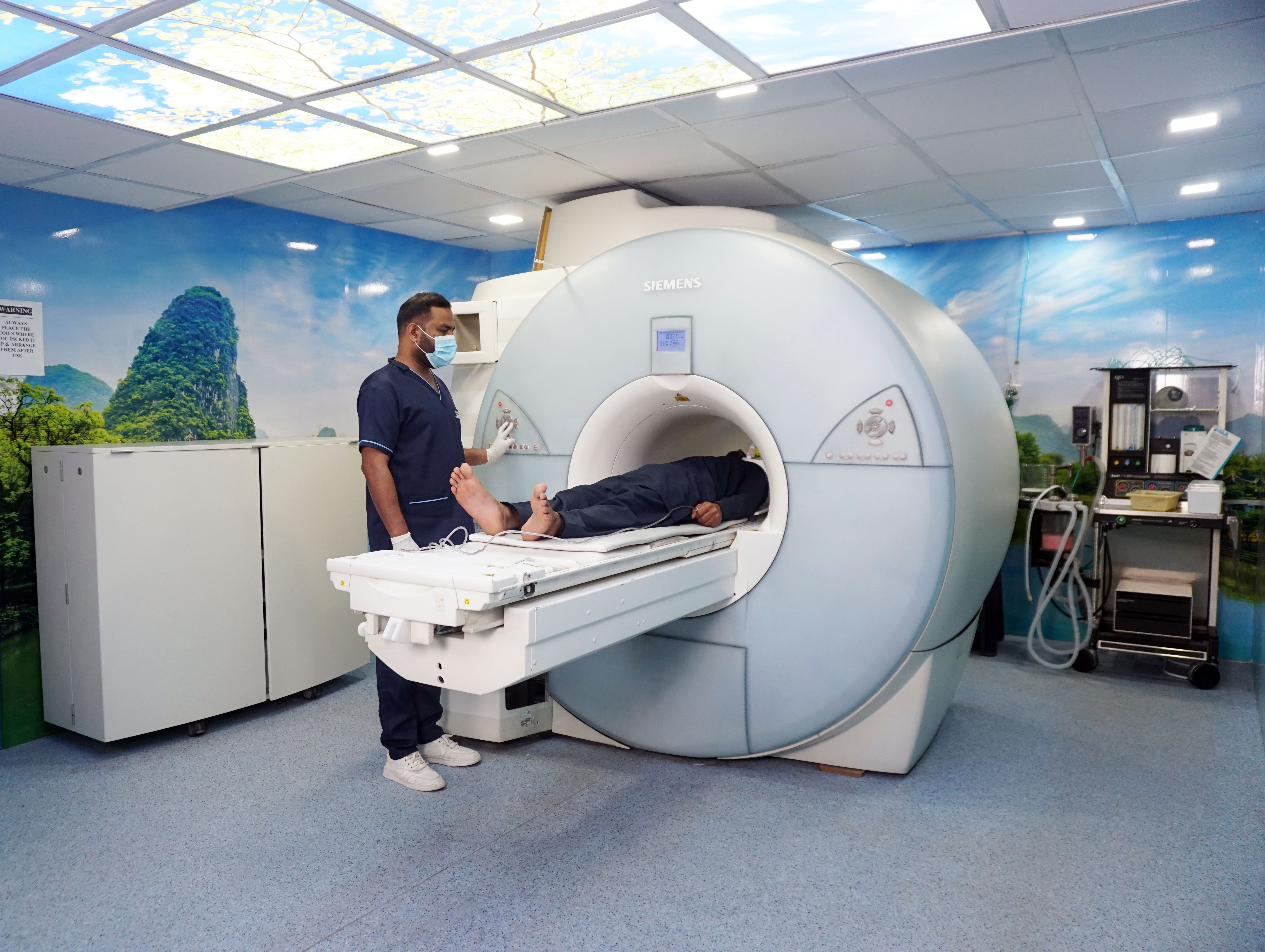
Medical imaging is where AI has moved furthest into routine clinical use, and it is also where hiring has become one of the biggest constraints on growth. For AI diagnostics companies, the question is no longer only what skills to look for, but where the right engineers actually are, what they cost in each market and how to attract them across borders. This analysis looks at the European medical imaging AI talent market in 2026.
In this article
- Key takeaways
- The European medical imaging AI talent landscape in 2026
- Regional talent hubs: where the best engineers are located
- Core technical skills and assessment criteria for imaging AI roles
- Comprehensive pan-European sourcing strategy
- Europe medical imaging AI salary and contractor rates (2026 data)
- Why Optima Europe for medical imaging AI search
- Frequently asked questions
- Conclusion
It covers how the talent pool is distributed, which hubs matter most, what separates specialists from general developers, how to source across borders, and indicative salary and contractor rates for Germany, the UK, France and Benelux.
Key takeaways
- The medical imaging AI talent pool in Europe is small and concentrated around a limited number of academic, clinical and industry hubs.
- Germany, the UK, France and the Netherlands hold the highest concentration of experienced engineers, but many strong candidates work outside their home country.
- The clearest differentiators are 3D and 4D imaging experience, model optimisation, data scarcity techniques and regulatory awareness.
- A borderless sourcing model, combining market mapping, direct outreach and relocation support, is usually faster than searching one local market.
The European medical imaging AI talent landscape in 2026
The European market for medical imaging AI talent in 2026 is fragmented, with the highest talent density concentrated around specialised academic spin-offs, imaging manufacturers and clinical research hubs in Germany, the UK, France and the Netherlands.
A medical imaging AI engineer is a specialised software engineer who applies deep learning, pattern recognition and computer vision to automate the detection, segmentation and classification of pathologies in medical scans. Talent density is a market measure of how concentrated qualified specialists are relative to the wider local workforce, and in medical imaging AI it varies sharply between cities.
A small, specialised pool
The number of engineers with real experience of clinical imaging data, regulated products and deployment in hospitals is small compared with the wider machine learning market. Many have a PhD in medical image analysis, biomedical engineering or physics, and a large share still work in academic groups, research hospitals or the R&D teams of established imaging companies. Only a fraction are actively looking for a new role at any time.
Why shortages delay products
Radiology and digital pathology companies rely on these engineers for core product work: improving model performance, adapting models to new scanners and sites, preparing evidence for regulatory submissions and integrating with hospital systems. When a key role stays open for months, roadmaps slip, clinical validation studies move back and certification timelines extend. For a scale-up, that can delay revenue and funding milestones.
Talent moves across borders
The market is not purely national. Many engineers trained in Southern and Eastern Europe, as well as outside the EU, work in Western European hubs, attracted by research groups, industry salaries and access to high-quality clinical data. Remote and hybrid work have also widened options: some companies hire senior engineers in other countries while keeping data and clinical partnerships in one main hub. This makes cross-border sourcing both necessary and practical.
Summary: Medical imaging AI talent in Europe is scarce, specialised and unevenly distributed. Shortages directly delay products, and because engineers move between countries, effective hiring requires a pan-European view of the market.
Regional talent hubs: where the best engineers are located
[SLIKA 2]
Sourcing strong medical imaging AI engineers in Europe means targeting regional ecosystems that combine leading computer science and engineering programmes with large university hospitals and imaging industry.
Germany: Munich, Erlangen and Heidelberg
Germany has one of Europe’s deepest imaging ecosystems. Erlangen and the wider Nuremberg region are home to Siemens Healthineers and a strong medical technology cluster around the university. Munich combines technical universities, Helmholtz Munich and a growing health AI startup scene. Heidelberg, with the German Cancer Research Center (DKFZ), is a major centre for medical image computing research. These hubs produce engineers with both strong technical training and exposure to clinical imaging.
United Kingdom: London, Cambridge and Oxford
The UK’s “golden triangle” offers a dense mix of universities, NHS trusts and AI startups. London brings large hospital networks and leading biomedical engineering and imaging departments, alongside a strong healthtech scale-up ecosystem. Cambridge and Oxford combine world-class research with spin-off companies in AI diagnostics and imaging. Access to NHS data partnerships makes UK experience particularly valuable.
France: Paris and Grenoble
Paris has a growing cluster of AI radiology and digital health companies, supported by large hospital networks and national research institutes. Grenoble combines engineering schools, research laboratories and medical technology expertise. French candidates often bring strong mathematical and applied research backgrounds.
Benelux and beyond
The Netherlands is a strong secondary hub, with Eindhoven’s imaging and medical technology industry and university research groups in diagnostic image analysis, such as in Nijmegen. Switzerland, the Nordics and parts of Central Europe also have smaller but high-quality pools, often linked to specific universities or companies.
How university hospitals act as incubators
In each of these hubs, university hospitals and their research groups are where many engineers first work with real clinical data, radiologists and pathologists. They produce PhD graduates and postdocs who already understand annotation, clinical validation and patient privacy, which makes them some of the most valuable candidates for industry roles.
Summary: The strongest pools sit in Munich, Erlangen and Heidelberg; London, Cambridge and Oxford; Paris and Grenoble; and Dutch hubs such as Eindhoven and Nijmegen. University hospitals and imaging companies in these regions are the main sources of experienced talent.
Core technical skills and assessment criteria for imaging AI roles
Vetting medical imaging AI professionals requires evaluating their ability to optimise models and integrate complex clinical data, not only their general coding skills.
- Advanced 3D and 4D Segmentation: Building architectures that process volumetric data from CT and MRI and time-series data from dynamic or functional imaging. Candidates should explain how they managed memory, resolution and patch strategies, and how they evaluated segmentation quality with clinically meaningful metrics. This experience clearly separates imaging specialists from engineers who have only worked with 2D images.
- Framework Fluency: Production-grade experience with PyTorch, TensorFlow and specialised medical frameworks such as MONAI. Look for evidence of deployed systems, not only research code: reproducible training pipelines, testing, version control for data and models, and integration with hospital systems or imaging platforms. Fluency with medical data libraries for DICOM and NIfTI is expected.
- Data Scarcity Mitigation: Practical experience with transfer learning, self-supervised pretraining and synthetic data generation to work with small, imbalanced clinical datasets. Strong candidates also understand multi-modal data integration, the combination of different clinical data sources such as MRI scans with genomic data or patient histories, to build more complete diagnostic models.
- Regulatory Architecture Knowledge: Designing pipelines that record the technical parameters, data versions and performance results needed for Notified Body auditing, the independent regulatory assessment that verifies a medical software product’s performance is reproducible and safe. Model optimisation, reducing a trained network’s computing needs, memory and latency without losing diagnostic accuracy, must also be documented and validated.
For a deeper look at role design and technical interviews, see our guide to hiring computer vision engineers in digital health.
Summary: The strongest candidates combine 3D and 4D imaging experience, production-grade medical frameworks, practical answers to data scarcity and an understanding of how regulated products are audited.
Comprehensive pan-European sourcing strategy
To overcome local talent shortages, healthtech companies need a borderless recruitment model built on active outreach and relocation support.
Stage 1: Market mapping through research and conferences
Many of the best candidates are visible through their work: publications, open-source contributions and presentations at medical imaging conferences such as MICCAI. Mapping authors, contributors and research groups across Europe identifies passive candidates who rarely appear on job boards.
Stage 2: Cross-border talent mobilisation
Relocation is often the fastest way to access the right talent. Germany’s EU Blue Card, for example, makes hiring qualified non-EU engineers realistic, and most hubs support English-speaking teams. For EU citizens, the main questions are relocation support, family needs and local cost of living rather than permits.
Stage 3: Technical value proposition
Senior imaging engineers choose employers based on the quality of the work. Clear information about datasets, clinical partners, compute infrastructure and the product’s regulatory stage matters more than generic perks. Companies with high-quality, well-annotated clinical data and real clinical deployment have a strong advantage.
Stage 4: Dual vetting
Assessments should test both algorithm design and an understanding of clinical diagnostics: how a model’s errors affect patients, how performance changes across sites and scanners, and how results should be validated. This separates true specialists from strong general machine learning engineers.
Summary: Map talent through research and conferences, support relocation across borders, lead with data, compute and clinical impact, and assess both technical and clinical understanding.
Europe medical imaging AI salary and contractor rates (2026 data)
Compensation for medical imaging AI engineers varies significantly by region, with the highest packages typically found in the DACH region and the UK.
Indicative 2026 ranges:
- Germany (DACH): senior permanent €115,000 - €145,000, principal / lead €150,000 - €180,000+, contractor €850 - €1,100 per day
- United Kingdom: senior permanent £100,000 - £130,000, principal / lead £135,000 - £165,000+, contractor £750 - £950 per day
- France / Benelux: senior permanent €95,000 - €125,000, principal / lead €130,000 - €160,000+, contractor €700 - €900 per day
Ranges are indicative and vary with company stage, equity, city, regulatory maturity of the product and whether the role includes team leadership. Munich and London typically sit at the upper end of their national ranges.
Summary: DACH and the UK pay the highest salaries for medical imaging AI talent, while France and Benelux are typically lower but competitive. Contractor rates offer flexibility at a premium, and local employment rules affect how contractors can be used.
Why Optima Europe for medical imaging AI search
Optima Europe helps AI diagnostics and healthtech companies reach medical imaging talent across Europe by combining market mapping with direct, confidential headhunting. Since 2013, Optima has focused on a small number of specialist sectors, including AI healthcare, MedTech and technology, with a candidate network of more than 33,000 professionals across the UK, Europe and North America.
- Deep tech and healthcare expertise. We recruit across engineering, clinical, regulatory and commercial roles, so we understand how imaging engineers work with clinicians and regulatory teams.
- Cross-border reach. We map and approach candidates across Germany, the UK, France, Benelux and the Nordics, rather than limiting a search to one country.
- Focused shortlists. Typically, around five carefully assessed candidates are presented per role, with no padded shortlists and no internal sales targets.
Summary: Optima combines sector focus, pan-European reach and careful assessment to help companies hire the imaging AI engineers their products depend on. For related roles, see our guides on bioinformatics and AI data scientists in Germany and regulatory affairs leaders for AI medical devices.
Frequently asked questions
Which European countries currently possess the highest talent density for medical imaging AI?
Germany, the United Kingdom, France and the Netherlands have the highest concentration of medical imaging AI talent in Europe. Within those countries, talent is concentrated in specific hubs: Munich, Erlangen and Heidelberg in Germany; London, Cambridge and Oxford in the UK; Paris and Grenoble in France; and Eindhoven and Nijmegen in the Netherlands. Switzerland and the Nordics also have smaller, high-quality pools. These regions combine strong engineering universities, large university hospitals and imaging companies, which together produce engineers with real clinical data experience.
What is the standard ratio between salary and equity for a lead medical AI engineer in Europe?
There is no single standard ratio, as it depends heavily on company stage and country. Early-stage startups often offer lower base salaries balanced by more meaningful equity, while later-stage scale-ups and established companies offer higher base pay with smaller equity grants. Equity structures also differ by market, such as virtual share programmes in Germany, EMI options in the UK and BSPCE in France. Candidates usually compare the total package, including vesting terms, the company’s funding stage and realistic exit potential, rather than the headline equity percentage.
How does the MONAI framework compare to traditional PyTorch pipelines for medical image analysis?
MONAI is an open-source framework built on PyTorch, originally started by NVIDIA and King’s College London, specifically for medical imaging. It does not replace PyTorch, but adds tools that standard pipelines lack, such as medical image transforms, support for 3D data, domain-specific network architectures, metrics and workflows for annotation and deployment. A traditional PyTorch pipeline can do the same work but requires more custom code. Engineers familiar with both can usually move faster with MONAI while keeping full PyTorch flexibility.
Are freelance medical imaging AI contractors a viable option for early-stage startups?
Yes, for specific, well-defined work such as building a prototype, optimising a model or preparing a validation study. Contractors bring specialist skills quickly without a long hiring process. The limitations are continuity and knowledge retention: core models, data pipelines and regulatory documentation need long-term ownership inside the company. Employment rules also matter, such as IR35 in the UK and the risk of false self-employment in Germany. Many startups use contractors for early projects, then hire permanent engineers as the product approaches certification.
How long should a healthtech firm allocate for a cross-border executive search for a principal AI scientist?
A cross-border search for a principal medical imaging AI scientist typically takes three to five months from briefing to start date. Market mapping and outreach usually take several weeks, followed by assessment and offer negotiation. Notice periods of one to three months are common for senior candidates, and relocation, including Blue Card applications for non-EU hires, can add further time. Starting early, defining the profile clearly and preparing a strong technical value proposition shortens the overall timeline.
Conclusion
Leadership in AI diagnostics depends on the ability to attract and retain the engineers who build, validate and improve imaging models. In Europe, that talent is scarce, concentrated in a few hubs and increasingly mobile across borders.
Companies that understand where the talent is, what it costs and what motivates it can hire faster and avoid costly product delays. If you are planning your next imaging AI hire, request a regional talent mapping session with Optima’s AI healthcare recruitment team to see candidate availability in your specific domain.

