
NIST CSF Explained for European Hiring Leaders
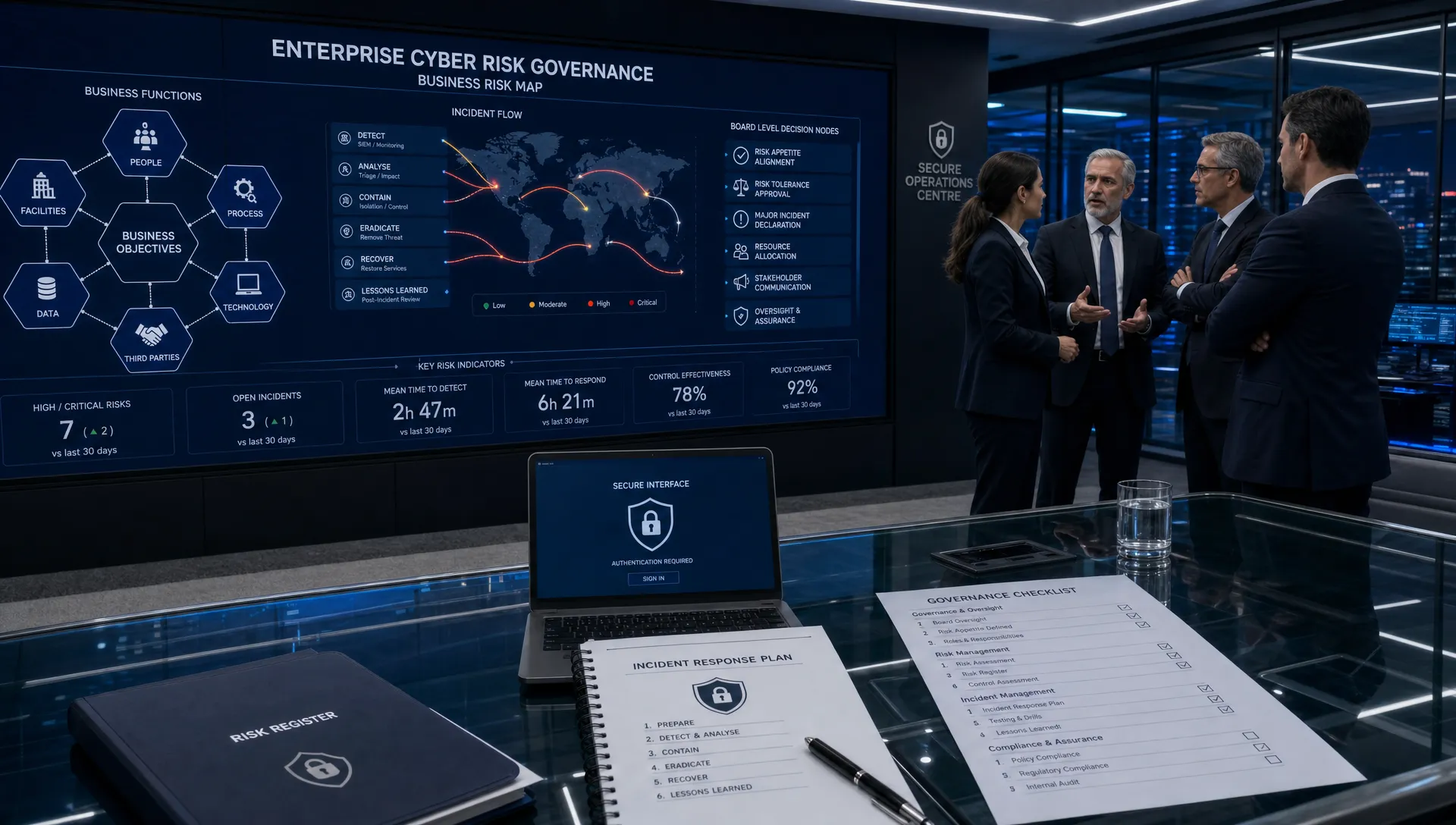
Cybersecurity hiring has moved far beyond the IT department. For European CEOs, CROs, COOs, HR leaders and talent teams, the question is no longer only whether the organisation has security tools in place. It is whether the business has the leadership, governance and operating capability to manage cyber risk while scaling.
That is where the NIST CSF becomes useful. Although it was created by the US National Institute of Standards and Technology, the framework has become a globally recognised way to describe cybersecurity maturity in plain business language. For hiring leaders, it helps clarify which roles are missing, what skills matter most and how to assess whether a candidate can improve resilience rather than simply manage technology.
In 2026, this matters even more across Europe. NIS2, DORA, GDPR expectations, supply chain audits and enterprise customer procurement processes are all pushing cyber capability into board discussions. A strong security hire is no longer just a technical appointment. It can influence revenue, customer trust, operational continuity and investor confidence.
What is the NIST CSF?
The NIST Cybersecurity Framework, commonly called NIST CSF, is a structured framework for managing cybersecurity risk. The latest major version, NIST Cybersecurity Framework 2.0, broadened its scope beyond critical infrastructure and introduced a stronger emphasis on governance.
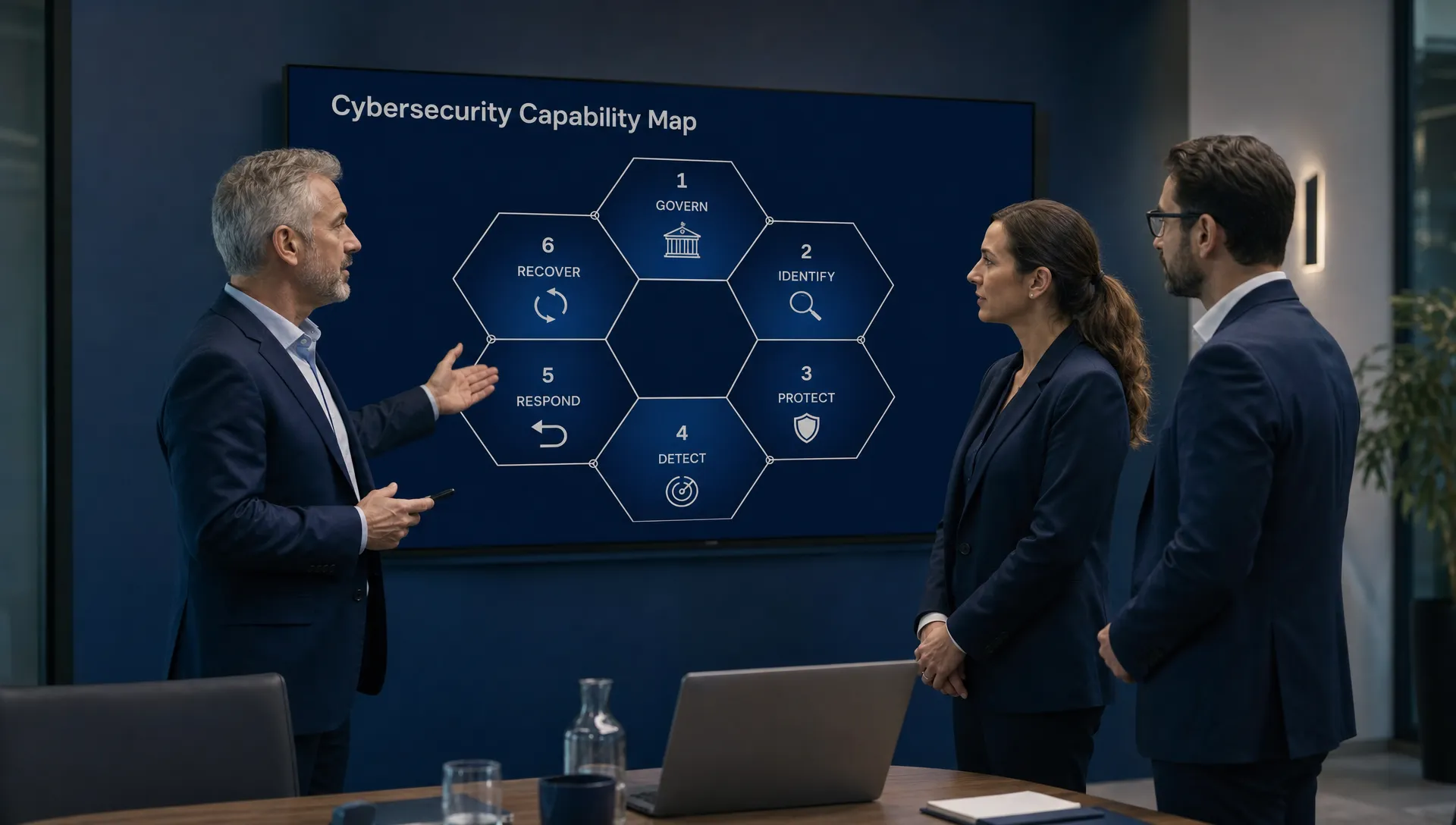
At its core, the framework organises cybersecurity activity into six high-level functions:
- Govern: How cyber risk is owned, overseen and aligned with business objectives.
- Identify: How the organisation understands assets, systems, data, risks and dependencies.
- Protect: How safeguards are implemented to reduce the likelihood or impact of incidents.
- Detect: How threats, anomalies and suspicious activity are found.
- Respond: How the organisation acts during and immediately after a cyber incident.
- Recover: How the business restores services, learns from events and improves resilience.
For hiring leaders, the power of NIST CSF is not that it names every control or technology. It gives executives a common language to connect cybersecurity with people, process and accountability.
A CFO may care about financial exposure. A CRO may care about enterprise customer confidence. A COO may care about continuity. A CHRO may care about leadership capability and organisational design. NIST CSF gives all of them a shared map.
Why European hiring leaders should pay attention
NIST CSF is not a European regulation, and it is not a substitute for legal or compliance advice. However, it is highly relevant in Europe because it complements the way organisations are now expected to demonstrate cyber maturity.
European firms are facing increased scrutiny from regulators, customers, insurers, boards and investors. A SaaS company selling into regulated enterprises may be asked about incident response, vendor risk and access controls. A medtech firm may need to evidence secure handling of sensitive data. A manufacturer adopting industrial AI may need to protect connected operational technology environments.
This is why hiring leaders should treat NIST CSF as a talent planning tool, not just a security framework. It helps answer practical questions such as:
- Do we need a strategic CISO, a hands-on security leader or both?
- Are our governance and risk skills strong enough for board reporting?
- Do we have enough cloud security depth for our architecture?
- Can our team detect and respond to threats quickly enough?
- Is recovery owned by technology only, or by the wider business?
The overlap with European regulation is particularly important. NIS2 has raised expectations around risk management, incident reporting, supply chain security and management accountability. Optima Search Europe’s guide to the NIS2 Directive impact on cybersecurity hiring explains how these pressures are changing demand for cyber leaders across the continent.
NIST CSF helps hiring teams make these regulatory pressures more actionable. Instead of asking for a generic cybersecurity leader, you can define the capability gap more precisely.
NIST CSF explained through a hiring lens
The easiest way for hiring leaders to use NIST CSF is to translate each function into organisational capability. This does not mean hiring one person for every function. In smaller organisations, one leader may cover several areas. In larger or regulated businesses, each function may involve multiple specialist teams.
Govern: leadership, accountability and board confidence
Govern is the function most relevant to CEOs, boards and senior hiring leaders. It covers strategy, policies, oversight, risk appetite, legal obligations and accountability.
From a talent perspective, Govern is where the CISO, security director, GRC leader and risk leadership roles become critical. A candidate who is strong in governance can explain cyber risk in commercial language. They can work with legal, finance, HR, product, sales and operations. They can also help the board understand what is acceptable risk and what requires investment.
For senior appointments, this is often the difference between a technical security manager and an executive security leader. A strong CISO should not only know the tooling landscape. They should be able to influence decision-making, challenge assumptions and align security with growth.
If your organisation is reaching the stage where cybersecurity has become a board-level issue, Optima’s perspective on CISO executive search in Europe offers a useful view of how the modern CISO mandate is evolving.
Identify: visibility before investment
Identify is about knowing what you have, where risk sits and which assets matter most. It includes asset management, data classification, dependency mapping, business environment analysis and risk assessment.
For hiring leaders, weak Identify capability often shows up as unclear job scopes. A company may say it needs a cloud security engineer, but the real problem is that no one has mapped critical assets, identities, vendors and data flows. Another company may hire a compliance manager when it actually needs someone who can build a risk register and translate technical exposure into business priorities.
Roles linked to Identify include security architects, GRC professionals, risk managers, asset management specialists, vendor risk managers and cloud security leaders. In AI, data analytics and digital health environments, this function also requires close collaboration with product, data and engineering teams.
The hiring lesson is simple: before opening a search, define what the business does not understand about its own environment. That gap often points directly to the right profile.
Protect: controls, engineering and secure growth
Protect is where many people instinctively think cybersecurity begins. It includes identity and access management, awareness training, data security, platform hardening, secure development, endpoint protection and cloud controls.
Hiring against Protect capability requires more than listing tools in a job description. A cloud-native SaaS company may need a security engineer who understands AWS, Azure or Google Cloud, infrastructure as code, Kubernetes, CI/CD pipelines and identity governance. A manufacturing business may need someone who understands segmentation between IT and operational technology. A regulated digital health company may need secure software development expertise combined with privacy awareness.
In fast-growth businesses, Protect is also where security can either enable scale or slow it down. The best candidates know how to embed security into engineering, procurement and onboarding without creating unnecessary friction.
This is particularly relevant as cloud environments become more complex across Europe. Optima’s analysis of cloud security hiring trends in Europe explores why demand is increasing for security talent that can operate across multi-cloud, compliance and product-led growth environments.
Detect: knowing when something is wrong
Detect is about visibility into threats and anomalies. It includes monitoring, threat detection, logging, security operations, alerting and continuous analysis.
The most common hiring mistake in this area is assuming that buying detection tools solves the problem. Tools can generate signals, but people decide whether those signals matter. A security operations analyst, detection engineer or threat intelligence specialist needs to understand attacker behaviour, business context and false positive reduction.
For scaling organisations, Detect capability may be built internally, outsourced to a managed security provider or delivered through a hybrid model. The hiring question is therefore not always whether you need a full internal SOC. It may be whether you have an internal leader capable of owning detection strategy, managing providers and interpreting security signals for the business.
Respond: pressure-tested decision-making
Respond covers what happens during an incident. It includes escalation, communications, analysis, containment, legal coordination and stakeholder management.
This is where leadership judgement becomes critical. A ransomware event, data breach or cloud misconfiguration can quickly involve executives, legal counsel, regulators, insurers, customers and employees. The best response leaders are calm under pressure, clear in communication and disciplined in documentation.
Hiring for Respond capability means looking beyond technical incident response skills. It means assessing whether a candidate can operate in ambiguity, brief executives, coordinate cross-functional teams and make timely decisions with incomplete information.
For senior roles, interview processes should include scenario-based questions. Ask candidates how they would manage a suspected breach affecting a major enterprise customer, or how they would balance containment with service availability. Their answer will reveal whether they think like a technologist only, or like a business risk leader.
Recover: resilience, trust and learning
Recover is about restoring services and strengthening the organisation after disruption. It includes disaster recovery, business continuity, communications, lessons learned and improvement planning.
This function is often under-owned. Technology teams may manage backups, but recovery is rarely only technical. If a cyber incident disrupts customer delivery, billing, logistics, clinical operations or factory output, business leaders must be involved.
Hiring leaders should look for candidates who understand resilience as an enterprise capability. That may include experience with business continuity planning, crisis management, recovery time objectives, cyber insurance processes and post-incident improvement.
In executive search, this capability is especially valuable because it shows maturity. A strong cyber leader is not only trying to prevent every possible incident. They are preparing the business to absorb shocks, recover quickly and retain trust.
How to use NIST CSF before opening a cyber search
Many companies begin recruitment with a job title. NIST CSF encourages a better starting point: capability gap analysis.
Before briefing a recruitment partner or launching a direct search, hiring leaders should gather the CEO, CTO, COO, HR, legal and relevant business leaders to discuss which functions are weakest. The conversation does not need to be overly technical. It should focus on business outcomes.
A practical pre-search diagnostic can include these questions:
- Which cyber risks are most likely to affect revenue, customer trust or operations?
- Which NIST CSF functions are currently owned by named leaders?
- Where are we dependent on one person, one provider or undocumented knowledge?
- Which regulatory or customer requirements are driving urgency?
- What must the new hire improve in the first 6 to 12 months?
This exercise will sharpen the role brief. It may reveal that you do not need the title you originally planned. For example, a company looking for a CISO may first need a senior GRC leader. A company seeking a SOC manager may need a detection engineer. A company hiring a compliance manager may actually need an executive security leader who can influence the board.
For CROs and GTM leaders, this diagnostic has a commercial dimension too. Security maturity can influence enterprise sales cycles, vendor onboarding and customer confidence. The same discipline that helps teams build repeatable revenue motions, such as a structured approach to B2B new customer acquisition, should also apply to cybersecurity trust signals in complex buying committees.
What to look for in candidates
NIST CSF can also improve candidate assessment. Instead of relying only on certifications, previous employers or tool experience, interview teams can test whether candidates understand cyber capability across the full operating model.
For leadership roles, look for evidence of business alignment. Has the candidate presented to boards or executive committees? Can they explain risk without jargon? Have they influenced budget decisions? Can they balance growth, customer experience and control?
For technical roles, look for depth and context. A strong cloud security engineer should understand architecture and automation, not just scanner outputs. A detection engineer should know how to tune alerts and map threats to real business assets. A GRC leader should be able to move beyond policy writing into practical risk management.
For cross-functional roles, look for collaboration. Cybersecurity now intersects with product, sales, HR, legal, procurement, finance and operations. Candidates who cannot influence outside the security team may struggle in European scale-ups and multinational environments.
Useful interview prompts include:
- Govern: How have you helped executives understand cyber risk and investment trade-offs?
- Identify: How would you build visibility in an environment with incomplete asset data?
- Protect: How do you embed security controls without slowing product delivery?
- Detect: How do you decide which alerts deserve attention?
- Respond: Tell us about a high-pressure incident and how you communicated with stakeholders.
- Recover: What changes did you implement after a disruption or near miss?
These questions work because they reveal judgement, maturity and communication style. They also help non-technical interviewers participate meaningfully in the hiring process.
Common mistakes when hiring around NIST CSF
The first mistake is treating NIST CSF as a checklist. The framework is useful because it supports risk-based thinking, not because every organisation needs the same structure or headcount.
The second mistake is over-indexing on certifications. Certifications can be valuable, but they do not automatically prove leadership capability, commercial awareness or the ability to build trust across functions.
The third mistake is writing job descriptions that are too broad. A role that asks for governance, cloud engineering, incident response, privacy, vendor risk, SOC management and board reporting may be describing an entire function, not one realistic candidate.
The fourth mistake is ignoring sector context. Cybersecurity in marketing technology SaaS is not identical to cybersecurity in medtech, biotech, AI infrastructure, industrial AI or cybersecurity vendors themselves. The best candidate profile depends on architecture, regulatory exposure, customer expectations and growth stage.
The fifth mistake is waiting until an incident or audit failure forces urgency. Reactive hiring narrows the candidate pool and often leads to rushed decisions. NIST CSF gives hiring leaders a way to plan before pressure peaks.
A practical NIST CSF hiring roadmap for 2026
For European and transatlantic businesses, a sensible hiring roadmap starts with ownership. Every NIST CSF function should have an accountable leader, even if delivery is shared or outsourced.
Next, define the business outcomes linked to each function. Govern may mean clearer board reporting. Identify may mean asset and vendor visibility. Protect may mean secure cloud expansion. Detect may mean faster triage. Respond may mean tested incident playbooks. Recover may mean improved continuity planning.
Then prioritise roles based on risk and growth stage. A Series B SaaS company expanding into enterprise accounts may need a security leader who can support procurement, compliance and product security. A listed manufacturer adopting connected systems may need OT security and resilience expertise. A digital health business may need a blend of privacy, cloud, product security and regulatory awareness.
Finally, align interview stakeholders before the search begins. If the CEO wants strategic risk leadership, the CTO wants hands-on engineering and HR wants people management experience, the process needs to reconcile those expectations early. Otherwise, strong candidates will receive mixed signals and the search will lose momentum.
A specialist recruitment partner can help translate cyber capability gaps into realistic role design, market mapping and candidate assessment. This is especially valuable when the target candidate pool is narrow, passive and spread across multiple European markets.
Frequently Asked Questions
Is NIST CSF mandatory in Europe? No, NIST CSF is not mandatory in Europe. It is a voluntary framework, but many European organisations use it because it provides a clear structure for managing cyber risk and communicating maturity to boards, customers and partners.
How does NIST CSF relate to NIS2? NIS2 is an EU directive with legal obligations for in-scope organisations, while NIST CSF is a cybersecurity risk management framework. They are different, but NIST CSF can help organisations structure the capabilities needed to support NIS2 readiness.
Should hiring leaders use NIST CSF to write job descriptions? Yes, but as a guide rather than a checklist. NIST CSF can help define whether a role is focused on governance, risk, cloud security, detection, incident response or resilience. This leads to clearer and more realistic job briefs.
Does every company need a CISO to align with NIST CSF? Not always. Smaller or earlier-stage organisations may start with a senior security manager, virtual CISO support or a GRC lead. As risk, regulation and customer expectations increase, a dedicated CISO may become more important.
Which NIST CSF function is most important for executive hiring? Govern is usually the most important for executive hiring because it covers accountability, risk ownership and board-level decision-making. However, the right priority depends on the organisation’s maturity, sector and threat exposure.
Turning NIST CSF into better cyber hiring decisions
NIST CSF gives European hiring leaders a practical way to move from vague cyber concern to clear talent action. It helps executives identify whether the organisation needs stronger governance, better visibility, deeper technical controls, improved detection, tested response or more resilient recovery.
For high-growth and established firms, the hiring advantage comes from translating that framework into precise role design and rigorous candidate assessment. The goal is not to hire cybersecurity titles. The goal is to build the leadership and capability required to protect growth, satisfy stakeholders and sustain trust.
Optima Search Europe supports organisations hiring business-critical and senior cybersecurity leaders across Europe and globally. If you are planning a CISO, security leadership, cloud security, GRC or cyber resilience appointment, a structured search process can help you reach the right candidates with clarity and confidence.

