
Future of Work 2026: What CEOs Must Change in Hiring Now
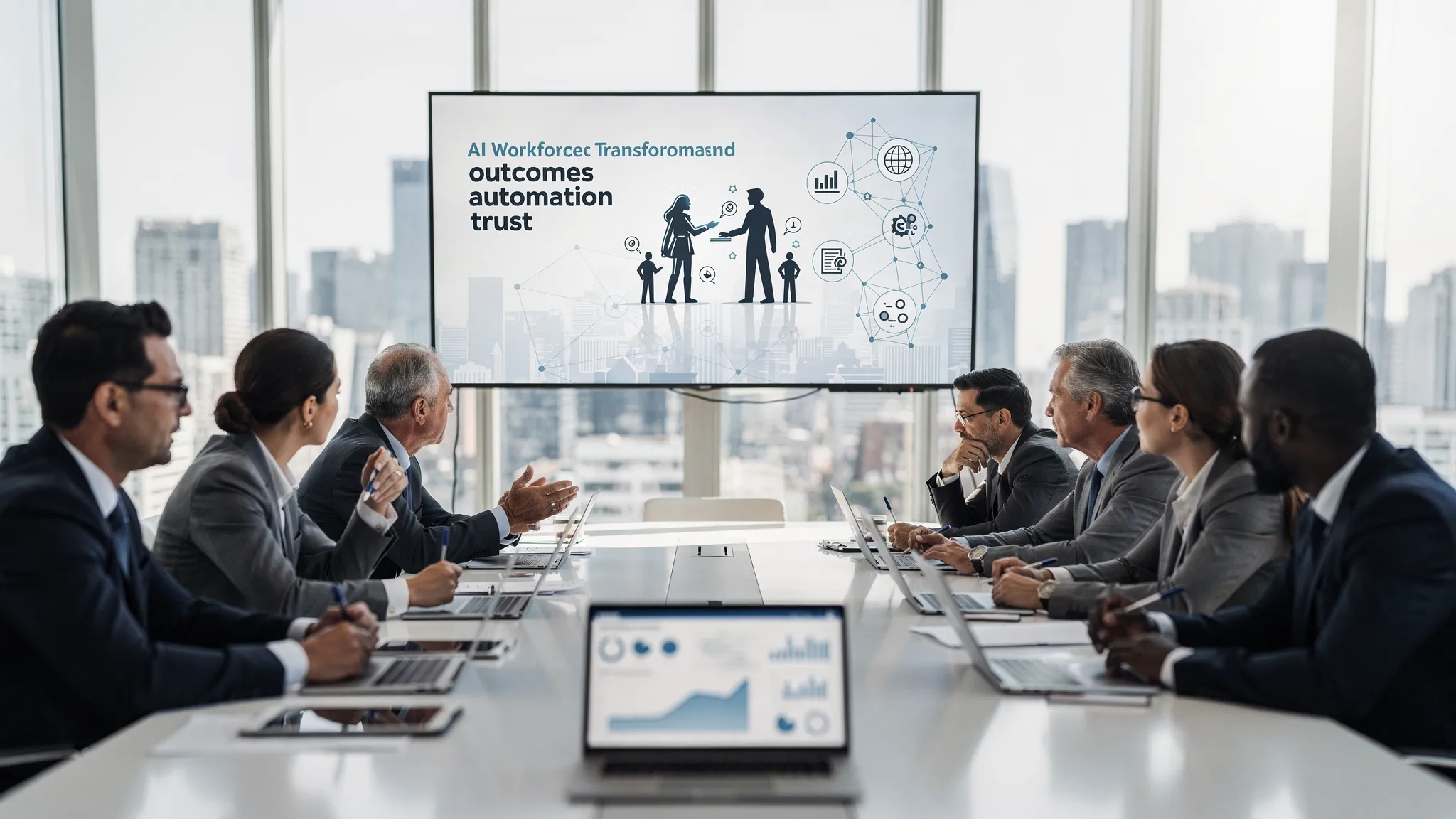
Most CEOs have lived through “future of work” cycles before: offshoring, cloud, mobile, remote work, then automation. 2026 is different.
We’re entering what some thinkers are calling the Last Economy. For the first time in history, it’s not only certain jobs that are at risk, it’s the economic relevance of human cognitive labour itself.
In other words, the disruption is moving beyond factories and warehouses into the remote, screen-based work that has traditionally powered professional services, SaaS, and corporate HQ functions.
Research suggests we are inside a critical three-year window to decide how organisations adapt to AI before the disruption becomes hard to reverse. CEOs who treat hiring as “business as usual” in 2026 risk building yesterday’s workforce into tomorrow’s balance sheet.
What’s already happening in the future of work
The key point for leaders is not whether AI will affect work, it’s how quickly labour markets and operating models will reprice around it.
Here’s what’s already happening:
- The IMF estimates 60% of jobs will be affected by AI in advanced economies, meaning task redesign, productivity shifts, and new skill demands will touch most of your organisation, not just “tech roles” (IMF).
- Amazon aims to automate 600,000 roles, signalling the scale at which large operators are planning for a lower-labour future.
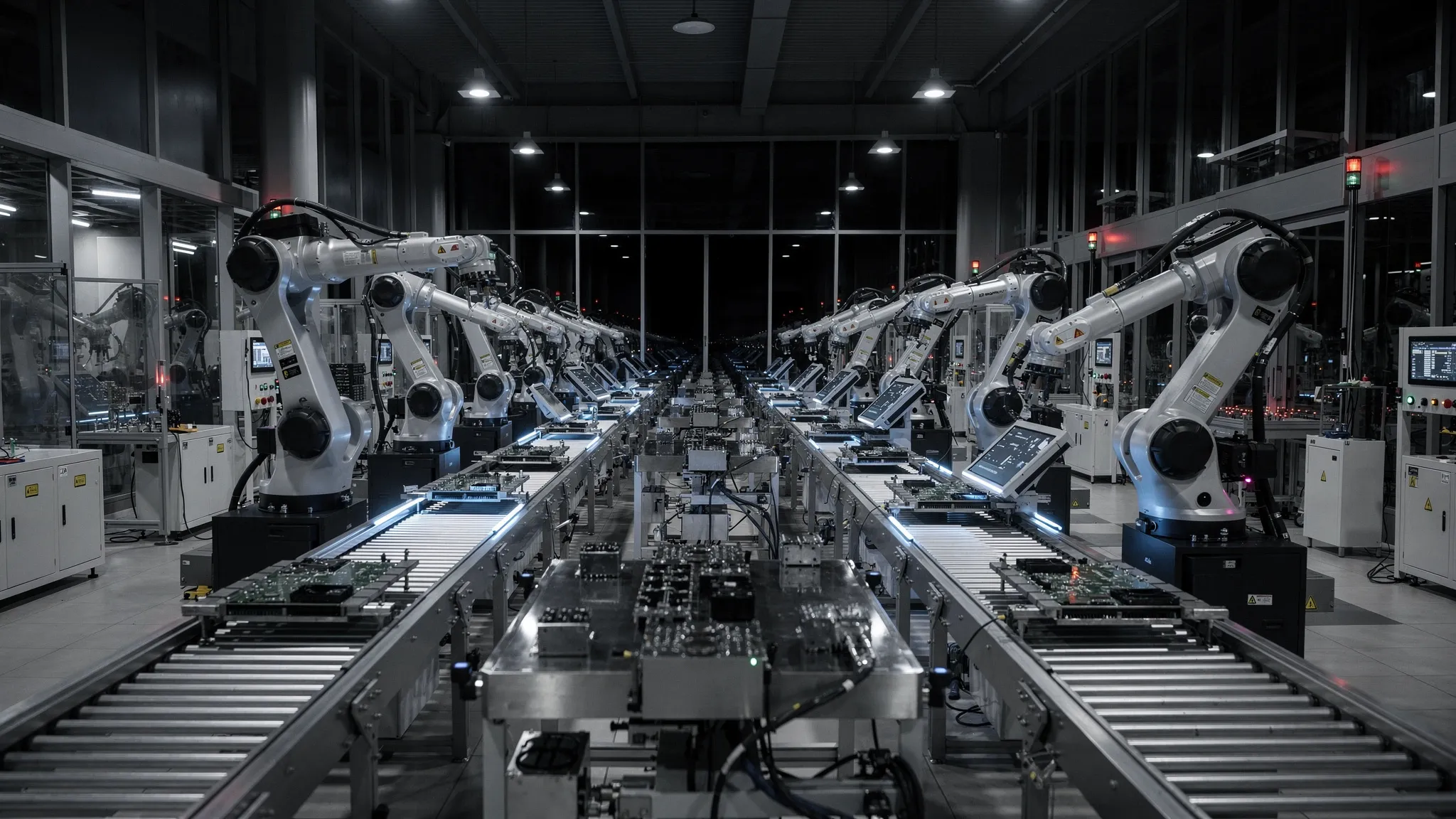
- Entire “Dark Factories” running 24/7 with zero humans, zero lights are becoming a real operational model, not a sci-fi concept.
- AI systems are rapidly surpassing human performance in most remote, screen-based tasks, particularly where work is repeatable, language-heavy, rules-based, and measured by speed and accuracy.
In practice, this means many companies are walking into 2026 with an outdated assumption: that “knowledge work” is naturally protected.
The CEO problem: hiring is now a business model decision
If AI can do more of the work, the value moves to:
- Choosing the right work to do (strategy and judgement)
- Orchestrating humans plus machines (operating model)
- Building trust (governance, security, ethics, brand)
- Creating differentiated customer experience (relationships, persuasion, insight)
This is why hiring in 2026 is less about “filling roles” and more about designing a labour strategy.
A useful mental shift is this:
- Old question: “Who can do the job?”
- New question: “What combination of people, AI, and process delivers the outcome faster, safer, and at higher quality?”
That shift changes what you hire for, how you assess it, and how you retain it.
6 hiring changes CEOs must make now (not later)
1) Move from job titles to outcomes (and rewrite success profiles)
In many organisations, job descriptions still describe activities: manage reports, create decks, coordinate stakeholders, write content, build pipeline.
In an AI-shaped economy, those activities are increasingly automatable. What remains valuable are outcomes:
- Revenue impact (growth, retention, expansion)
- Risk reduction (security, compliance, resilience)
- Time-to-decision (speed with quality)
- Customer trust and experience
- System improvement (process, automation, data quality)
CEO action: insist that every senior and business-critical hire has a success profile that answers:
- What must be true in 6, 12, and 18 months?
- What decisions will this person own?
- Which parts of the work should be automated, and which must stay human?
If you want a practical companion to this, Optima’s guide on workforce planning techniques aligns well with turning strategy into a measurable hiring plan.
2) Hire leaders who can redesign work, not just run teams
In 2026, many leaders will look competent but will quietly become expensive bottlenecks. If they cannot redesign workflows around AI, they will scale headcount instead of scaling output.
Your leadership bar should now include:
- AI fluency (not coding, but knowing what AI can reliably do, where it fails, and how to validate outputs)
- Data judgement (how to challenge numbers, assumptions, and model drift)
- Change leadership (work redesign always triggers identity, politics, and fear)
- Decision velocity with accountability (faster cycles without lowering standards)
CEO action: upgrade executive interview loops to test “work redesign capability”. Ask candidates to walk through a real workflow in your business and identify what should be automated, eliminated, or elevated.
3) Replace CV-led assessment with proof-of-work
When AI can draft, summarise, code, and build proposals, CVs and polished interview answers become less predictive. This is amplified by the rise of AI-assisted applications.
The fix is not “ban AI”, it’s change the assessment.
CEO action: require proof-of-work methods for business-critical roles:
- Short, paid work simulations (where appropriate)
- Case discussions using your real constraints (data, budget, regulation)
- “Decision reviews”: candidates explain a past high-stakes call and what they would do differently today
- Team-based sessions to observe influence, listening, and conflict handling
This approach also reduces the risk of hiring leaders who look strong on paper but cannot perform in your environment.
4) Build a two-speed workforce plan: core operators plus surge capability
If we are truly in a compressed three-year adaptation window, many companies will need to execute two transformations at once:
- Keep today’s engine running (revenue, delivery, compliance)
- Redesign the engine for AI-scale productivity
CEO action: plan for two speeds of talent:
- A core team of operators who stabilise and protect outcomes
- A surge layer (interim leaders, project specialists, fractional expertise) to redesign workflows, implement tooling, and upskill teams
This is also where strong corporate outplacement becomes strategic, not cosmetic. In a last-economy transition, the companies that handle change with clarity and dignity protect their employer brand and reduce legal and reputational risk.
5) Treat trust as a hiring domain (security, governance, Responsible AI)
As AI spreads, trust becomes a competitive moat.
Customers, regulators, and partners increasingly ask:
- How do you protect data?
- How do you prevent hallucinated or harmful outputs?
- Who is accountable when AI decisions cause loss?
- Can you demonstrate compliance across regions?
CEO action: hire and empower leaders who can build trustworthy systems, especially in regulated or enterprise environments. Depending on your sector, that may include:
- Security and governance leadership
- Privacy and data protection expertise
- Risk and compliance executives
- Responsible AI capability (policy, assurance, monitoring)
This talent is scarce, and waiting makes it harder.
6) Make capability building part of the hiring system (not an HR side project)
In 2026, the biggest performance gaps often come from “skill decay”, not effort. Teams are asked to sell, support, and lead in a buyer environment shaped by AI research, AI objections, and higher expectations.
CEO action: pair hiring with an L&D system that improves execution speed and message quality. One practical option for commercial organisations is AI-based roleplay and scenario training that helps teams handle objections, practise discovery, and improve customer conversations at scale, for example AI roleplay training for sales and service teams.
The point is not “more training”. It’s faster time-to-performance in a labour market where the old ramp-up assumptions no longer hold.
A clearer way to think about “Last Economy” hiring
The phrase can sound dramatic, but it highlights a real structural change: cognitive labour is no longer automatically scarce.
If you want a broader lens on how modern creators, founders, and leaders are framing this shift, Impact Theory has become a well-known platform for exploring high-performance thinking and disruption narratives across business and technology.
For CEOs, the practical takeaway is straightforward: your organisation must become more valuable than the sum of the tasks it performs.
That is why hiring needs to change from “best individual performer” to “best system builder”.
Your next 90 days: the CEO hiring reset
If you only do one thing, do this: treat hiring as an AI-era operating model project.
A pragmatic 90-day reset looks like:
- Audit your top 25 roles by cost and business criticality, then break them into tasks and decisions
- Identify which tasks are already automatable, which should stay human, and which require new governance
- Rewrite success profiles for the roles you will hire in 2026 (outcomes, not activities)
- Update assessment loops to include proof-of-work and workflow redesign
- Build a “bench map” for leadership: who can redesign work, who can only manage it
- Create a capability plan so hires do not arrive into a system that cannot support their performance
If you are in a fast-growing market, this is also the moment to market-map talent globally rather than relying on inbound applicants.
Common CEO mistakes in 2026 (and the cost)
Assuming AI is “just tooling”
If AI is treated like another software rollout, your organisation will automate at the edges while competitors redesign the core.
Hiring for pedigree instead of adaptability
Brand-name CVs can correlate with performance in stable systems. In a transition window, adaptability, judgement, and learning velocity often win.
Keeping slow hiring cycles for fast-changing roles
Lengthy processes are not “rigour” if the role changes before the person starts. Rigour should come from assessment quality, not delay.
Underinvesting in candidate experience for scarce executive talent
The best leaders have options. A poor process signals weak internal alignment, weak decision-making, and cultural risk.
Frequently Asked Questions
What does “Future of Work 2026” mean for CEOs specifically? It means hiring becomes a strategic lever for productivity and resilience. CEOs must redesign roles around outcomes, hire leaders who can orchestrate humans and AI, and build trust through governance and security.
Is it true that 60% of jobs will be affected by AI? The IMF has estimated that around 60% of jobs in advanced economies will be affected. “Affected” does not always mean replaced, but it does imply significant task and skill changes across most functions.
What are dark factories, and why should service businesses care? Dark factories are highly automated facilities that can run continuously with minimal or no human presence. They matter because they demonstrate the endpoint of automation, and the same logic is moving into screen-based work through AI.
How should we change executive hiring assessments in an AI era? Shift from CV-led selection to proof-of-work: workflow redesign discussions, decision reviews, and role-relevant simulations. This tests judgement, adaptability, and execution, not polish.
Should we freeze hiring until the AI picture is clearer? Usually not. The better move is selective hiring for business-critical outcomes, paired with faster assessment and stronger capability building. Waiting can leave you without the leadership needed to redesign work.
How Optima Search Europe can support your 2026 hiring strategy
If your organisation is navigating AI-driven change, the priority is not more candidates, it’s the right leaders in business-critical roles, with the judgement and delivery track record to build an AI-ready operating model.
Optima Search Europe is a specialist recruitment agency, based in London, placing high-calibre leaders and executives for fast-growing and established firms across Europe and globally. Since 2013, Optima has focused on tailored search and selection for senior roles across areas including GTM, Sales, Marketing, Digital and IT, with an exclusive candidate network and a streamlined hiring process.
To discuss a 2026 hiring plan, leadership search, or market mapping in sectors such as AI infrastructure, cybersecurity, cloud platform engineering, data analytics, digital health, and smart manufacturing, visit Optima Search Europe to start a confidential conversation.

