
Computer Vision Engineers in Digital Health: Recruitment Guide

Computer Vision Engineers in Digital Health: Recruitment Guide
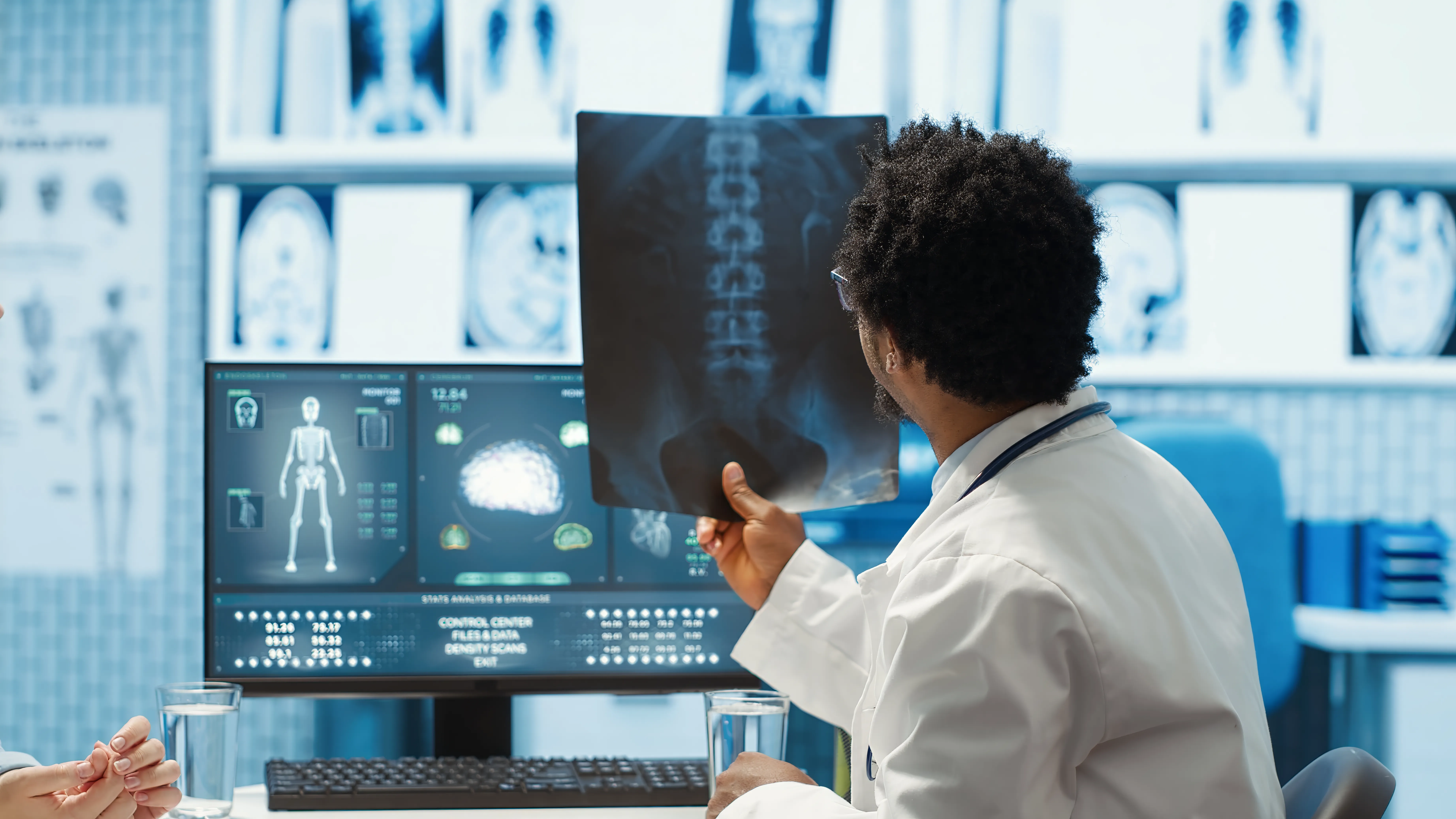
AI that reads medical images is one of the most mature areas of healthcare AI, from radiology and pathology to dermatology and surgical video. The engineers who build these systems carry an unusual responsibility: a missed finding or a false alarm is not a bug report, it is a clinical event. This guide explains how to find, assess and hire computer vision engineers who can build medical-grade imaging AI in Europe.
In this article
- Key takeaways
- The high-stakes demand for medical computer vision engineers
- Crucial technical competencies for medical imaging AI profiles
- Designing a mid-to-senior medical computer vision job description
- Sourcing strategies for locating elite medical imaging talent
- Computer vision engineer salary benchmarks in Europe (2026 data)
- Why Optima Europe is your sourcing partner for vision AI
- Frequently asked questions
- Conclusion
It covers why medical computer vision differs from general computer vision, which skills to test, how to structure the role, where to find candidates and what compensation to expect in Germany, the Netherlands and the UK in 2026.
Key takeaways
- Medical computer vision carries clinical and regulatory risk, so hiring needs a stricter technical and clinical evaluation than general tech roles.
- Strong candidates combine production-grade deep learning with hands-on experience of DICOM data, 3D imaging and small, imbalanced clinical datasets.
- Model generalization across hospitals, scanners and patient populations is one of the clearest tests of real medical imaging experience.
- Experienced medical imaging engineers are scarce and mostly passive, so direct, pan-European headhunting is usually required.
The high-stakes demand for medical computer vision engineers
Recruiting computer vision engineers for digital health requires a strict evaluation process, because errors in medical diagnostic models carry direct clinical and patient safety risks that standard enterprise software does not face.
A computer vision engineer (healthcare) is a specialised machine learning engineer who develops algorithms and deep learning models to process, analyse and interpret medical images or video streams.
Where demand comes from
Imaging is where healthcare AI has moved furthest into clinical use. Radiology accounts for the largest share of AI-enabled medical devices cleared by regulators, and demand is growing in digital pathology, dermatology, ophthalmology, endoscopy and surgical robotics. Each of these fields needs engineers who can turn large, complex image datasets into models that work reliably in hospitals.
Why general computer vision experience is not enough
Engineers from autonomous driving, retail or security bring valuable skills: large-scale training, real-time inference and strong engineering practice. But medical data behaves differently. Images are often 3D or multi-channel, stored in specialised formats, and labelled by a small number of expensive clinical experts. Positive cases can be rare, and the cost of a false negative is very different from misclassifying a product on a shelf. Engineers without medical experience often underestimate these differences.
The generalization challenge
Model generalization is the ability of an AI model to perform accurately on new, unseen patient data from different clinics and imaging machines. It is one of the hardest problems in the field. A well-known 2018 study in PLOS Medicine found that a deep learning model for detecting pneumonia on chest X-rays performed worse on data from other hospitals than on data from the hospitals it was trained on, partly because it had learned site-specific signals rather than disease features. Engineers who understand this risk design data, validation and monitoring very differently.
Summary: Medical imaging AI is in high demand, but it requires engineers who understand clinical risk, the nature of medical data and the difficulty of generalizing across hospitals. General computer vision experience is a strong starting point, not a complete profile.
Crucial technical competencies for medical imaging AI profiles
A qualified computer vision engineer in digital health must demonstrate deep expertise in medical data formats such as DICOM alongside production-grade mastery of frameworks like PyTorch and specialised 3D imaging libraries.
Medical data and formats
DICOM (Digital Imaging and Communications in Medicine) is the international standard for storing, transmitting and viewing medical imaging data. Candidates should be comfortable reading and processing DICOM files and metadata, handling formats such as NIfTI for research data, and working with tools like pydicom, SimpleITK or NiBabel. They should also understand the privacy implications of DICOM metadata, which often contains patient information that must be removed before training.
2D and 3D segmentation and detection
Convolutional neural networks (CNNs) are a class of deep neural networks most commonly used to analyse visual data, and they remain the foundation of many medical imaging models, alongside newer Vision Transformers. Test candidates on real tasks: segmenting organs or lesions in CT and MRI, detecting findings in X-ray, or working with noisy ultrasound and gigapixel pathology slides. Familiarity with medical imaging frameworks such as MONAI, or architectures like U-Net and nnU-Net, is a strong signal.
Small and imbalanced datasets
Medical datasets are often small, expensive to label and heavily imbalanced. Strong candidates can explain how they handled this in practice: augmentation, transfer learning, self-supervised pretraining, careful loss functions, patient-level data splits and appropriate metrics such as sensitivity, specificity and AUC rather than accuracy alone.
Explainability, validation and audit trails
AI that qualifies as a medical device must meet MDR or IVDR requirements, and the EU AI Act classifies AI medical devices that need third-party assessment as high-risk, with those obligations applying from 2 August 2028 under the Digital Omnibus. Engineers should understand external validation, subgroup analysis, model versioning and documentation that a Notified Body or clinical partner can review. Explainability tools such as saliency maps are useful, but candidates should also understand their limits.
Summary: Assess four areas: hands-on experience with DICOM and medical data, 2D and 3D segmentation and detection, practical methods for small and imbalanced datasets, and validation and documentation practices suitable for regulated products.
Designing a mid-to-senior medical computer vision job description
[SLIKA 2]
An effective medical computer vision job description must clearly prioritise data pipeline quality and clinical validation experience over generic machine learning buzzwords.
- Architecture Development: Training, evaluating and deploying CNNs and Vision Transformers for detection, segmentation or classification of disease. Describe the imaging modalities, clinical use case and current model maturity. Strong candidates want to know whether they are building from scratch, improving an existing product, or preparing a model for clinical validation and regulatory submission.
- Data Pipeline Management: Building secure infrastructure to ingest, clean, de-identify and version multi-modal clinical images while preserving DICOM standards and metadata integrity. This includes handling data from multiple hospitals and scanner vendors. Be specific about data volumes, sources and the tools already in place, as data quality is often the deciding factor for experienced candidates.
- Annotation Quality Management: Medical data annotation is the precise labelling of clinical features, anomalies or tissue boundaries by qualified clinical experts to create training data. The role works with radiologists, pathologists or clinical advisory boards to define labelling protocols, measure agreement between annotators and resolve disagreements. Poor labels limit every model built on them.
- Optimisation and Deployment: Compressing and optimising models to run efficiently on edge devices, imaging hardware or secure cloud and hospital networks, often with strict latency and integration requirements. This may include quantisation, inference optimisation and integration with PACS and clinical workflows. Mention target environments clearly, as edge and cloud deployment require different experience.
Summary: The strongest job descriptions are specific about modalities, data, annotation and deployment environments. Engineers respond to concrete technical problems and clear ownership, not to lists of fashionable frameworks.
Sourcing strategies for locating elite medical imaging talent
Because the pool of experienced medical imaging engineers in Europe is small and concentrated, companies usually need an active, pan-European headhunting strategy that targets research institutions, spin-offs and established health technology companies.
Stage 1: Academic ecosystem mapping
Many strong engineers come from university groups focused on biomedical image computing, medical image analysis or computational pathology, as well as research hospitals. PhD graduates and postdocs from these groups often have exactly the right technical foundation and are considering a move into industry.
Stage 2: Competitor sourcing
Engineers already working at MedTech, AI diagnostics and digital health companies across the UK and EU bring the most directly relevant experience: regulated development, clinical validation and deployment. They are rarely looking, so approaches need to be direct, confidential and specific about the opportunity.
Stage 3: Cross-industry filtering
Adjacent fields can offer strong candidates, such as geospatial and satellite imaging, industrial inspection or scientific imaging, especially where engineers have a background in biology, physics or medicine. The key is to filter carefully for those who can adapt to clinical data, regulation and the higher cost of errors.
Stage 4: Technical and ethical vetting
Screening should include practical exercises that reflect medical reality: evaluating a model across subgroups, reducing false negatives, spotting data leakage between training and test sets, or explaining how to test a model on data from a new hospital. Candidates who think about fairness, bias and patient impact without being prompted are usually the strongest.
Summary: Combine academic mapping, direct approaches to engineers at health technology companies and careful cross-industry sourcing, then validate candidates with practical, medically realistic technical and ethical assessments.
Computer vision engineer salary benchmarks in Europe (2026 data)
Salaries for computer vision engineers with proven clinical deployment experience carry a clear premium, driven by competition from global technology companies and well-funded health scale-ups.
Indicative base salary ranges for 2026:
- Mid-level CV Engineer (HealthTech): Germany €80,000 - €105,000, Netherlands €75,000 - €95,000, United Kingdom £70,000 - £90,000
- Senior Medical Imaging AI Specialist: Germany €110,000 - €145,000, Netherlands €105,000 - €135,000, United Kingdom £95,000 - £125,000
- Lead / Principal Computer Vision Scientist: Germany €150,000 - €185,000+, Netherlands €140,000 - €175,000+, United Kingdom £130,000 - £160,000+
Ranges are indicative and vary with company stage, location, equity, team size and the regulatory maturity of the product.
Summary: Medical imaging experience commands a premium over general computer vision roles. Equity, access to high-quality data, compute resources and meaningful clinical impact often decide competitive offers as much as base salary.
Why Optima Europe is your sourcing partner for vision AI
Optima Europe helps digital health companies shorten hiring timelines by reaching computer vision and medical imaging professionals across Europe’s main technology and healthcare hubs. Since 2013, Optima has focused on a small number of specialist sectors, including AI healthcare, MedTech and technology, with a candidate network of more than 33,000 professionals across the UK, Europe and North America.
- Expertise across deep tech and life sciences. We recruit across engineering, clinical, regulatory and commercial roles, so we understand how computer vision engineers need to work with clinicians and regulatory teams.
- Technical and compliance assessment. Candidates are assessed on their engineering skills and on their understanding of medical data, validation and regulated development before they reach your shortlist.
- Focused shortlists. Typically, around five carefully assessed candidates are presented per role, with no padded shortlists and no internal sales targets.
Summary: Optima combines sector focus, cross-border reach and careful assessment to help AI diagnostics companies hire the engineers their products depend on. For related hires, see our guides on regulatory affairs leaders for AI medical devices and bioinformatics and AI data scientists in Germany.
Frequently asked questions
Can a computer vision engineer from the autonomous vehicle industry transition into digital health easily?
They can transition successfully, but it is rarely effortless. Autonomous driving engineers bring strong skills in large-scale training, real-time inference, sensor data and safety-critical thinking. The main gaps are medical data formats such as DICOM, 3D imaging, small and expensive labelled datasets, clinical validation and regulation under MDR, IVDR and the EU AI Act. Engineers who are curious about medicine and willing to work closely with clinicians often adapt within months. For a first or lead imaging hire, however, direct medical imaging experience usually reduces risk.
What is the standard time-to-hire for a senior medical computer vision engineer via executive search?
A senior medical computer vision search in Europe typically takes two to four months from briefing to accepted offer, depending on how specialised the profile is, the location and whether remote or relocation options are available. Start dates can be later, because senior engineers in Germany, the Netherlands and the UK often have notice periods of one to three months. Early market mapping, a clear technical brief and a competitive offer shorten the process considerably.
How important is experience with 3D image processing compared to traditional 2D image analysis?
It depends on the product. For CT, MRI, PET and many surgical and radiotherapy applications, 3D experience is essential, because volumetric data requires different architectures, memory management, preprocessing and evaluation methods. For X-ray, dermatology, ophthalmology and many endoscopy tasks, 2D experience may be sufficient. Digital pathology adds its own challenge: very large 2D whole-slide images. When hiring, match the requirement to your modalities and roadmap, and ask candidates for concrete examples of the data types they have handled.
What specific programming languages and frameworks should a digital health computer vision engineer know?
Python is the core language, with PyTorch as the most common deep learning framework in medical imaging research and industry. Useful specialised tools include MONAI for medical imaging, pydicom, SimpleITK and NiBabel for medical data, and OpenCV for general image processing. For deployment, experience with ONNX, TensorRT, Docker and cloud platforms is valuable, and C++ helps for edge or device integration. Experiment tracking and data versioning tools support the documentation needed for regulated products.
Should our computer vision team report to the Head of AI or the VP of Biomedical Engineering?
In most AI diagnostics companies, the computer vision team should report to the Head of AI or the CTO, because their core work is model development, data and machine learning infrastructure. The team still needs very close collaboration with biomedical engineering, clinical and regulatory teams, especially when models run on medical devices or imaging hardware. Where the product is primarily a physical device with an AI component, a structure under biomedical engineering can work, provided machine learning leadership has a strong voice in technical decisions.
Conclusion
Diagnostic AI is only as reliable as the engineers who build it. In medical imaging, every pixel can carry clinical consequences, and models must work not only in the lab, but across hospitals, scanners and patient populations.
Finding engineers who combine deep learning expertise with an understanding of medical data and regulation requires a targeted search across Europe. If you are building or expanding your computer vision team, book a short alignment call with Optima’s AI healthcare recruitment team to map current candidate availability.

